High-End Outdoor Hospitality: Industry Analysis of Luxury Camping USA
The intersection of high-end hospitality and wild landscapes has created a distinct sector within American tourism. Once defined by primitive self-sufficiency or basic recreational vehicle parks, outdoor lodging now includes sophisticated semi-permanent sites. These operations deliver residential comfort across isolated ecosystems. Developing these sites requires balancing environmental protection, off-grid utility engineering, specialized land permits, and guest safety protocols.
Transitioning from traditional camping to managed outdoor lodging shifts operational focus from individual survival skills to complex facility management. Guests expect residential amenities, such as climate-controlled canvas suites, private plumbing, and fine dining, while staying in remote areas. Providing these services in environments exposed to extreme weather, flash floods, or wildlife requires significant infrastructure planning.
Evaluating this sector requires examining land use rights, environmental regulations, and off-grid technology. Properties operate across diverse biomes, including high-altitude Rocky Mountain basins, arid Southwestern deserts, and temperate coastal forests. Each environment presents unique operational challenges, requiring specialized foundation engineering, waste management, and energy generation systems.
Analyzing high-end outdoor lodging requires treating these sites as complex, remote hospitality operations. Studying building designs, environmental impacts, and risk management frameworks helps developers and travelers evaluate these properties objectively. Strategic planning ensures these sites deliver memorable outdoor experiences while protecting fragile natural landscapes.
Understanding “luxury camping usa”
Analyzing the phrase luxury camping usa requires moving beyond consumer marketing terms toward an operational evaluation of remote hospitality infrastructure. This sector blends boutique hotel services with temporary architectural designs set within pristine natural landscapes.
Distinguishing Glamping from Primitive Wilderness Camping
Traditional backcountry camping demands physical self-sufficiency, route-finding skills, and personal gear management. Guests carry their own shelter, process drinking water, and manage waste. High-end outdoor lodging replaces these physical burdens with professional staff, static luxury canvas suites, and private bath facilities, allowing participants to experience remote environments without technical wilderness skills.
Structural Requirements of Remote Luxury Sites
Delivering high-end comfort off the municipal grid requires specialized civil engineering. Site operators install advanced micro-grids combining solar arrays, battery storage banks, and quiet backup generators. Potable water must be pumped from deep wells or trucked in, filtered through multi-stage purification systems, and heated efficiently. Waste management requires self-contained septic tanks or advanced incineration systems that comply with local environmental codes.
Balancing Environmental Exposure with Guest Safety
Wilderness sites expose guests directly to natural hazards, including sudden windstorms, wildlife encounters, and sharp temperature swings. High-end operators mitigate these risks through structural engineering and trained staff. Anchoring canvas structures to solid timber decks resists heavy wind loads, while dedicated guide teams enforce bear-safety protocols across the property.
Deep Contextual Background
Historical Evolution of Managed Outdoor Lodging
Managed outdoor lodging traces its roots to early twentieth-century African safari camps and American Adirondack Great Camps. Wealthy travelers explored remote wilderness areas supported by large crews who set up elaborate canvas tents furnished with brass beds, rugs, and portable baths. These early setups proved that remote wilderness exploration could co-exist with refined personal comfort.
Simultaneously, the expansion of Western transcontinental railroads gave rise to grand national park lodges. Iconic timber and stone structures like the Old Faithful Inn in Yellowstone demonstrated monumental construction techniques. These historic hotels established early standards for regional architecture integrated directly into wild national park landscapes.
Post-War Recreational Expansion and RV Parks
The mid-twentieth century brought affordable automobiles and mass-produced camping gear, opening public lands to millions of American families. Commercial campgrounds and recreational vehicle parks proliferated along national park borders, focusing on basic utility hookups and high-density parking rather than architectural luxury or deep environmental immersion.
Contemporary Eco-Luxury Architectural Trends
Over the past two decades, outdoor hospitality evolved toward low-impact, design-focused accommodations. Modern properties utilize geodesic domes, custom safari canvas structures, repurposed shipping containers, and elevated treehouses. These semi-permanent designs offer high visual appeal and residential comfort while allowing property owners to meet strict land-use regulations.
Conceptual Frameworks and Mental Models
Evaluating outdoor hospitality properties requires structured analytical frameworks to assess site selection, environmental risks, and utility infrastructure.
The Wilderness Exposure-to-Comfort Index
This model evaluates properties along a dual spectrum measuring environmental isolation against internal comfort levels. High-tier properties maximize both dimensions, placing fully appointed luxury suites directly within rugged, isolated wilderness corridors.
The Off-Grid Utility Resilience Model
This engineering model measures an outdoor site’s ability to maintain heating, cooling, power, and water during severe weather events. Key factors include battery storage capacity, backup fuel reserves, water storage volume, and secondary communication links.
The Land-Impact and Reversibility Matrix
This environmental model evaluates accommodation structures by their permanent impact on surrounding soil and vegetation. Semi-permanent canvas structures built on raised post-and-beam timber decks rate high in reversibility, leaving minimal ground scars if removed.
Key Categories or Variations
Outdoor luxury destinations across the United States vary significantly by architectural style, regional geography, and operational complexity.
Canvas Safari Tents on Raised Timber Decks
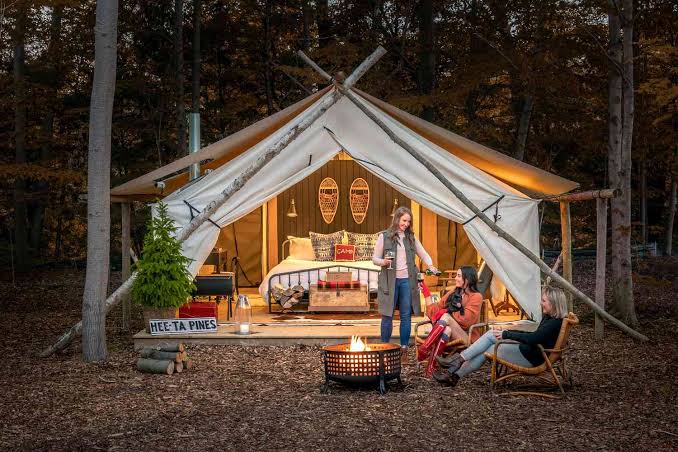
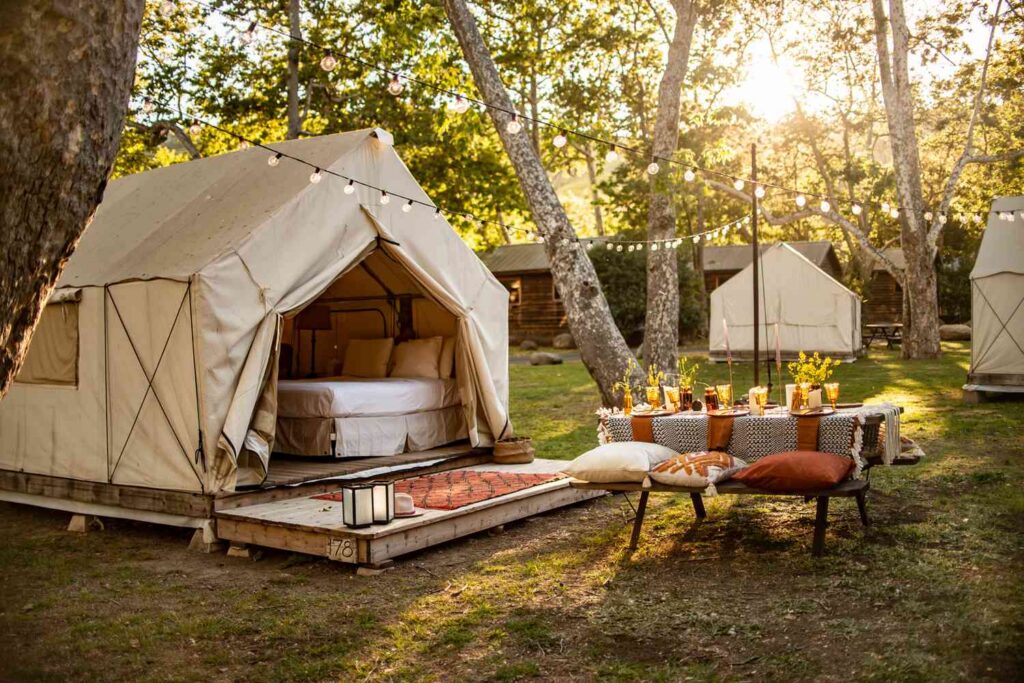
The most widespread format features heavy-duty weather-resistant canvas stretched over timber frames. These structures sit on raised wooden decks, housing plush king beds, wood-burning stoves, and en-suite bathrooms. They offer authentic tent sounds and ocean or mountain breezes while maintaining indoor comfort.
Clear-Roof Geodesic Domes
Geodesic domes utilize high-strength steel alloy frames covered in durable PVC skins, often featuring large transparent panels for night-sky viewing. Their spherical shape distributes wind loads efficiently, making them popular in high-wind desert or mountain environments.
Custom Elevated Treehouse Suites
Built within forest canopies, treehouse accommodations utilize specialized heavy-duty bolts that allow host trees to grow naturally. These elevated retreats offer unique views and privacy, though installing plumbing and heating at elevated heights increases construction complexity.
Repurposed Modern Shipping Containers
Cargo container conversions utilize rigid steel shells to create durable, weather-tight cabins featuring floor-to-ceiling glass walls. These units offer high structural durability against snow loads and wildfire risks, making them ideal for rugged, extreme-weather locations.
Custom A-Frame and Timber Cabins
Combining classic mountain heritage design with modern minimalist interiors, custom A-frame cabins feature steep rooflines that shed heavy winter snow easily. Large glass facades frame forest views while offering residential insulation and full climate control.
Detailed Real-World Scenarios
Scenario A: High-Altitude Desert Mesa in Utah
A luxury dome resort operates at six thousand feet elevation near Moab, Utah, facing extreme temperature swings.
-
Primary Constraint: Summer daytime temperatures top one hundred degrees Fahrenheit, while winter nights drop below freezing.
-
Failure Mode: Installing standard residential air conditioning units that overwhelm off-grid solar power banks during peak afternoon heat.
-
Second-Order Effect: Power grid failure leaves guest domes without cooling, forcing emergency guest evacuations to town hotels.
-
Optimal Protocol: Utilize solar shade canopies above domes, install high-efficiency mini-split heat pumps, and bury water pipes below the desert frost line.
Scenario B: Coastal Rainforest Site in Washington State
A luxury canvas retreat operates within a temperate rainforest, experiencing over one hundred inches of annual rainfall.
-
Primary Constraint: Continuous moisture accumulation causing mold, wood rot, and damp interior bedding.
-
Failure Mode: Utilizing low-grade cotton canvas without mildew-resistant coatings or proper deck ventilation.
-
Second-Order Effect: Fabric degradation leads to rain leaks, damaging luxury furnishings and creating unpleasant interior odors.
-
Optimal Protocol: Treat canvas with marine-grade silicone coatings, install wood-burning stoves for interior drying, and construct elevated, well-ventilated timber decks.
Scenario C: High-Alpine Winter Retreat in Montana
A timber cabin site operates near a major ski area during sub-zero winter conditions.
-
Primary Constraint: Heavy snow accumulation and freezing temperatures threatening utility lines.
-
Failure Mode: Inadequate insulation around above-ground water supply lines leads to frozen, burst pipes.
-
Second-Order Effect: Water damage ruins cabin interiors, halting winter operations for multiple weeks during peak season.
-
Optimal Protocol: Install heat-traced water lines, utilize steep A-frame roof designs to shed snow, and maintain automated backup propane heating systems.
Planning, Cost, and Resource Dynamics
Developing and operating high-end outdoor lodging requires balancing high capital expenditures against seasonal revenue streams. The table below outlines financial dynamics across typical property tiers.
Direct Capital Expenses versus Off-Grid Infrastructure Outlays
Building structures accounts for only part of total development costs. Installing off-grid utilities—such as solar battery micro-grids, commercial septic fields, and deep water wells—often equals or exceeds building construction expenses.
The Impact of Short Seasonal Operating Windows
Properties in high-altitude or northern regions operate within narrow four-to-six-month seasonal windows. Operators must generate annual target revenues during these tight periods while maintaining winterization protocols during closed months.
Tools, Strategies, and Support Systems
Operating high-end outdoor properties relies on specialized technology, off-grid hardware, and emergency support systems.
Hybrid Micro-Grid Power Systems
Modern outdoor properties utilize integrated power management systems. Solar photovoltaic arrays feed high-capacity lithium iron phosphate (LiFePO4) battery banks, monitored continuously by smart inverter systems that start backup diesel generators only when battery levels drop below critical thresholds.
Advanced Water Purification Infrastructure
Processing surface or well water requires multi-stage filtration trains incorporating sediment filters, activated carbon blocks, and ultraviolet (UV) disinfection units. Regular water testing ensures compliance with state drinking water standards.
Dedicated Wilderness Telemetry and Safety Communication
Properties maintain Satellite Internet connections paired with backup two-way satellite transceivers. Staff use encrypted land-mobile radios to track guest excursions and coordinate emergency response efforts across expansive acreage.
Risk Landscape and Failure Modes
Outdoor hospitality sites face environmental hazards and operational risks that require continuous management.
Environmental Disasters and Rapid Evacuation Scenarios
Wildfires, flash floods, and severe windstorms pose major threats to canvas and timber structures. Properties must establish clear evacuation routes, clear defensible space around buildings, and maintain emergency communication links with local county emergency services.
Structural Wear and Canvas Fabric Degradation
UV radiation, high winds, and moisture degrade canvas covers over time. Canvas flies typically require waterproofing treatments every two years and full replacement every five to seven years to prevent leaks.
Wildlife Habituation and Food Storage Failures
Inadequate trash management attracts wildlife, including bears, raccoons, and rodents, to guest areas. Properties must install commercial bear-proof dumpsters, enforce strict in-room food bans, and train staff on wildlife hazing techniques.
Governance, Maintenance, and Long-Term Adaptation
Operating legally and sustainably requires navigating complex land-use permits, health codes, and environmental regulations.
Permitting and Zoning Regulatory Compliance
Securing land-use permits for commercial outdoor lodging requires approval from county planning commissions, state environmental departments, and local fire districts. Compliance requirements include traffic impact studies, water usage rights, and fire suppression plan approvals.
Annual Property Pre-Season Checklist
-
Inspect all canvas seams, tension guy lines, and timber deck support posts for wear.
-
Flush potable water storage tanks, replace filter cartridges, and test UV disinfection bulbs.
-
Service backup diesel generators, load-test solar battery banks, and inspect electrical wiring.
-
Clear brush and dead vegetation to maintain fifty-foot defensible fire buffers around structures.
-
Inspect all wood-burning stove flues, spark arrestors, and interior fire extinguishers.
Measurement, Tracking, and Evaluation
Assessing property performance involves tracking quantitative utility and operational metrics alongside qualitative guest feedback.
Quantitative Metrics
-
Energy Autonomy Ratio: Track the percentage of total daily energy supplied by solar power versus backup generators.
-
Water Consumption per Guest: Monitor daily gallon usage to optimize conservation protocols and septic loading.
-
Maintenance Cost per Unit: Track annual repair and fabric replacement expenses across different accommodation types.
Qualitative Metrics
-
Ecosystem Integration Perception: Evaluate guest feedback regarding how naturally structures blend into the environment.
-
Off-Grid Comfort Satisfaction: Measure guest satisfaction regarding shower water pressure, room temperatures, and bed quality.
-
Wilderness Immersion Value: Assess guest ratings concerning peace, night-sky visibility, and wildlife viewing quality.
Common Misconceptions and Oversimplifications
Myth 1: Outdoor Luxury Lodging Is Environmentally Destructive
Well-designed properties utilize raised deck foundations, solar power, and self-contained waste processing, resulting in a much smaller permanent ground footprint than traditional concrete hotel developments.
Myth 2: Canvas Tents Cannot Provide True Four-Season Comfort
Modern safari tents featuring insulated fabric liners, wood-burning stoves, and backup electric mini-split heat pumps maintain comfortable interior temperatures even in sub-zero winter weather.
Myth 3: Glamping Sites Require Minimal Capital to Build
While canvas tents cost less than brick-and-mortar buildings, installing off-grid utilities—such as deep wells, septic fields, and solar power banks—requires substantial capital investment.
Practical and Contextual Considerations
Understanding the growth of luxury camping usa requires balancing business profitability, land conservation, and local community benefits.
Local Community Impacts and Economic Contributions
Outdoor resorts create rural jobs, generate local occupancy tax revenues, and support nearby restaurants and outfitters. Partnering with local businesses ensures tourism spending benefits host communities directly.
Environmental Stewardship and Land Conservation
Leading operators purchase large land parcels, develop only a small percentage of the acreage, and place the remaining land into conservation easements. This approach preserves wildlife corridors while offering guests private access to wild natural landscapes.
Conclusion
The evolution of luxury camping usa demonstrates that high-end hospitality and wild natural landscapes can co-exist successfully through smart design and sound operational management. By utilizing low-impact architecture, robust off-grid utilities, and proactive risk management, operators deliver high physical comfort within pristine natural settings.
Whether staying in canvas safari suites, clear geodesic domes, or timber A-frame cabins, guests can experience wild natural landscapes without sacrificing personal comfort or safety. Continued innovation in sustainable building practices, renewable energy storage, and land stewardship will ensure the long-term growth of this dynamic outdoor sector. Smart planning, environmental respect, and engineering excellence remain the foundation of every successful property.